

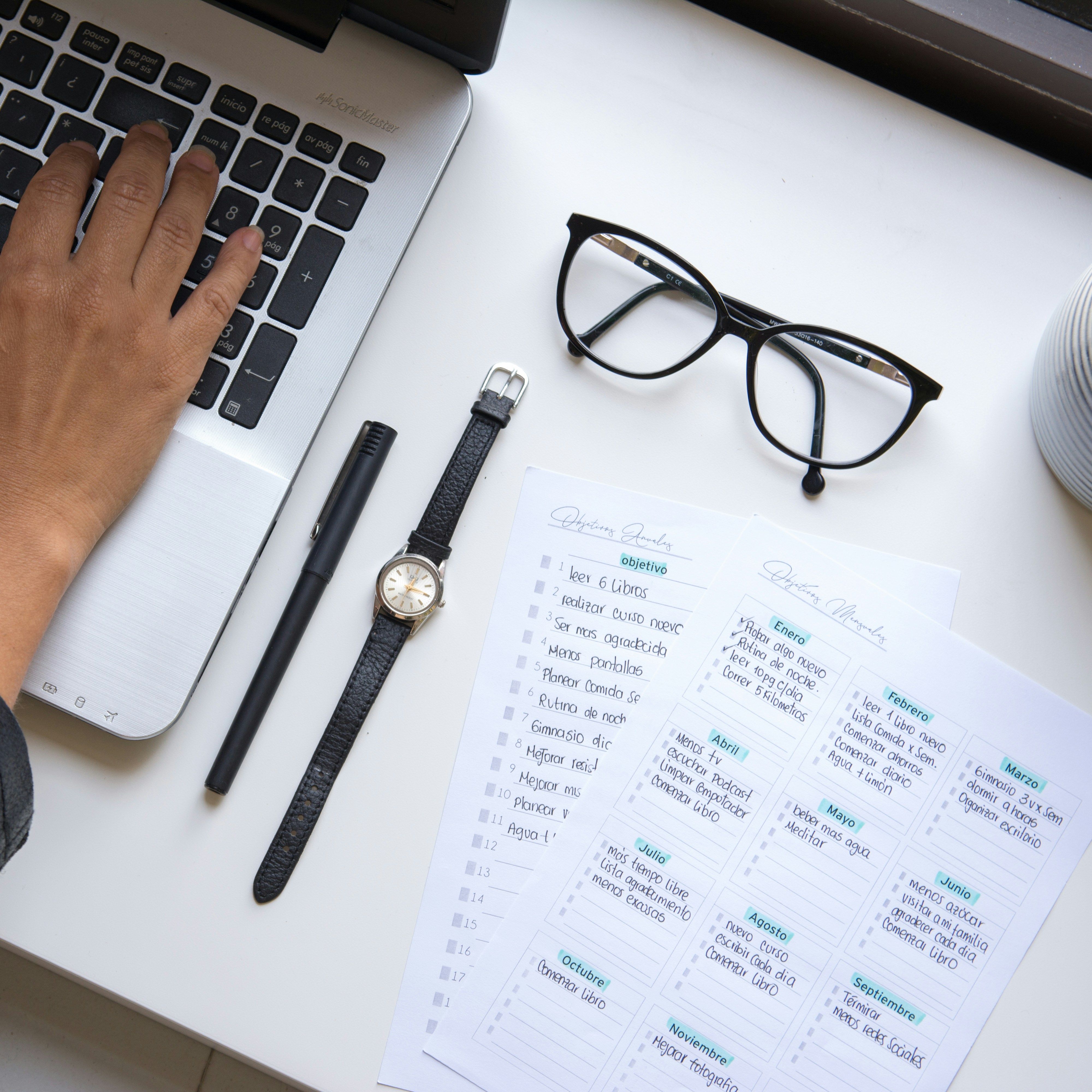
To-do lists have been around forever, and for good reason. Believe me, I don’t think I’m reinventing the wheel here, I just think it’s interesting to understand more about why they are so helpful. No matter what you call them – plans, priorities, goals, or reminders, there’s something so satisfying about writing things down and crossing them off once you’re done. It’s one of the simplest yet most effective ways to stay organized and on track.
There’s actually some interesting psychology behind the satisfying feeling. Research shows that our brains crave order and closure. According to an interesting article I was reading, when we make a to-do list, our brain offloads the stress of holding multiple tasks in working memory. It’s called the “Zeigarnik effect” – basically, our minds remember unfinished tasks better than completed ones, so writing them down provides a sense of control and calm.
What type of to-do list works best for you?
There isn’t a one-size-fits-all approach to staying organized, especially for students and new grads navigating school, social life, extracurriculars, internships and job searching. Thankfully, we live in a world full of productivity tools that can help structure both your day and your brain.
Essentially, you just want to choose something that’s going to fit into your routine and that you’ll actually use (ex. If you find carrying a pen and paper around with you annoying and prefer to stick to laptop only, an online platform for organization will likely work better for you.)
If you like structure and collaboration: Tools like Asana, Notion or even Excel are great. You can organize projects, track deadlines, and even set reminders to sync across devices. I fell in love with Notion once I was in college – my college program had me in 8 classes per semester, when I was used to only 4 or 5 in university, so I needed something like this to help me stay on track.
If you prefer something not on a screen: Don’t underestimate the power of a pen and paper. I’ve recently gone back to handwritten lists, especially now that I’m only focusing on work tasks each day. It’s a nice break from screens, and a small way I can slow down in a fast paced role.
How to make your to-do list actually work
After writing a to-do list basically every day for the last 7 or 8 years, I would consider myself qualified to share a few tips that can help to make your list more effective, and hopefully less overwhelming:
Keep it realistic: Be honest with yourself about how much time you actually have and how big your tasks are. Some days, it might mean tackling 2 major things and other days it could be 9 smaller ones.
Prioritize: Use labels (or highlighters) to know when tasks are ‘urgent’ or ‘important’ or just ‘nice to do’, so you know where to focus your energy first.
Break it down: Make it easier on yourself by breaking up your big, daunting tasks into smaller ones. For example, ‘apply to jobs,’ can become ‘update resume,’ ‘write cover letter,’ and ‘submit applications.’
Celebrate progress: Every checkmark (digital or inked) is a tiny win. Let yourself feel good about it.
Final Thoughts
At the end of the day, your to-do list doesn’t have to be perfect or fancy, it just has to work for you. Some days you’ll power through 10+ tasks and others you might just complete 1 (and that’s okay.) Sometimes, you’ll add something you’ve already finished just to cross it off (and that’s also okay, we’ve all been there.)
That’s the whole point – it’s not just about staying productive, but also about giving yourself credit for the progress you’ve made.